

Description
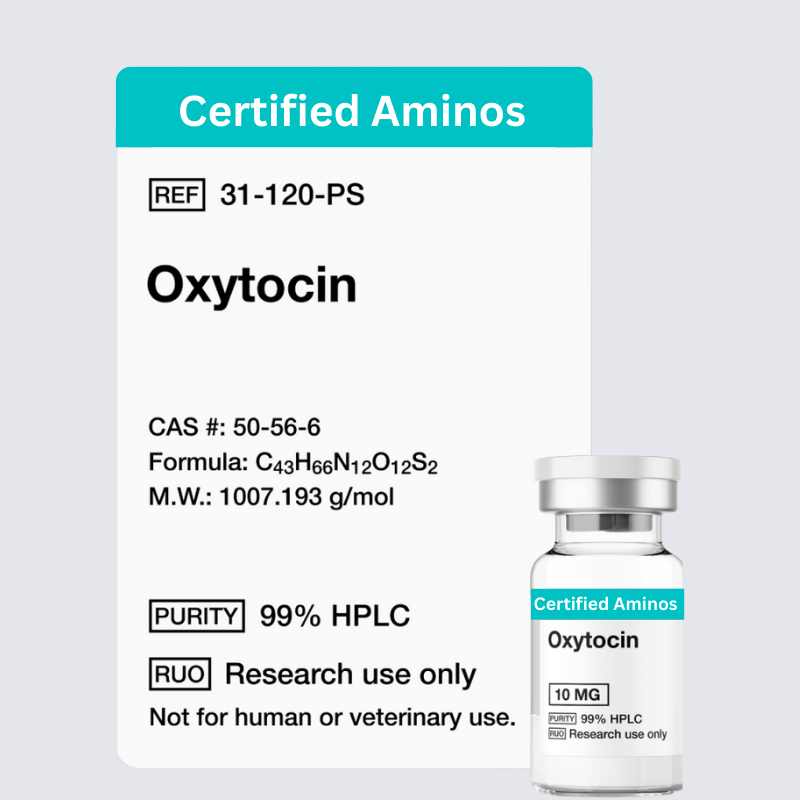
Oxytocin 10mg (6000 IU) – Peptide Overview
Oxytocin is a powerful natural peptide hormone with significant roles in various physiological processes, including childbirth, social bonding, and wound healing. While traditionally known for its involvement in reproduction and emotional bonding, new research is uncovering its broader benefits, such as improving cognitive function, reducing cardiovascular risks, and aiding in diabetes management.
What is Oxytocin?
Oxytocin is a short peptide consisting of just nine amino acids. It is produced in the hypothalamus and released by the posterior pituitary gland. Additionally, it is synthesized in various organs like the placenta, ovaries, testes, retina, adrenal glands, thymus, and pancreas. Although it is often categorized as a neurohypophysial hormone, emerging studies show that oxytocin’s effects extend to a variety of tissues beyond the brain.
Oxytocin is known for its dual functions:
-
As a Neurotransmitter: It plays a crucial role in childbirth, milk ejection, and bonding between mother and child.
-
As a Hormone: It also functions in sexual reproduction, emotional bonding, and has anti-inflammatory properties.
Key Benefits of Oxytocin
1. Enhanced Wound Healing
Recent studies show that higher oxytocin levels are linked to faster wound healing. Social interaction that increases oxytocin can boost the body’s ability to repair wounds, while negative relationship dynamics can slow healing. This peptide has been shown to modulate inflammation and improve recovery rates, especially when oxytocin levels are elevated.
2. Cardiovascular Health
Oxytocin has a protective role in cardiovascular health. Research suggests it helps lower blood pressure, improve glucose tolerance, reduce fat mass, and alleviate anxiety—all factors that contribute to heart health. There is even evidence suggesting that oxytocin may prevent the progression of cardiovascular diseases, such as atherosclerosis, by regulating its receptors.
3. Diabetes Management
Oxytocin is increasingly recognized for its potential role in diabetes treatment. Studies in mice indicate that oxytocin enhances glucose uptake and improves insulin sensitivity, which could be particularly beneficial for managing obesity and type 2 diabetes. Furthermore, research has shown that oxytocin treatment in humans can help reduce glucose and insulin levels, with a notable weight loss effect.
4. Cognitive Performance
Oxytocin has been linked to cognitive improvements, particularly in cases of early-life maternal deprivation. Research on mice has shown that oxytocin can enhance cognitive function, such as learning and memory, especially when stress is a factor. This indicates oxytocin’s potential for boosting mental clarity and resilience.
5. Anxiety and Mood Regulation
Oxytocin has significant effects on anxiety and social behaviors. It is believed to help reduce stress and improve social interactions, making it a potential therapeutic option for individuals suffering from social anxiety, borderline personality disorder, and other emotional regulation disorders. By enhancing positive emotional responses and reducing social stress, oxytocin may help alleviate anxiety and depression.
6. Hunger and Weight Regulation
Research suggests that oxytocin plays a role in regulating hunger and appetite. For individuals with conditions like Prader-Willi syndrome, which causes uncontrolled eating, oxytocin has been shown to help control hunger signals. Its ability to influence feeding behavior may open new pathways for managing obesity and related disorders.
7. Muscle Maintenance and Repair
Oxytocin is also crucial for muscle health. As we age, declining oxytocin levels contribute to sarcopenia (age-related muscle wasting). However, studies show that administering oxytocin can reverse this effect, helping to regenerate muscle tissue and maintain muscle mass in older individuals. This could be a promising approach to addressing age-related muscle degeneration.
Oxytocin in Research and Applications
Oxytocin is widely studied in the fields of psychology, medicine, and physiology. Its potential applications span beyond its traditional roles in childbirth and bonding, offering promising benefits in wound healing, heart health, diabetes management, and even cognitive function. While most research focuses on animal models, human trials continue to explore its wide-ranging effects.
Why Choose Oxytocin 10mg (6000 IU)?
Amino Pharm’s Oxytocin 10mg (6000 IU) is an ideal product for research purposes, particularly in studies exploring the peptide’s therapeutic potential in wound healing, cardiovascular health, and metabolic conditions. The peptide exhibits minimal side effects and is known for its excellent bioavailability, making it a key ingredient in advancing scientific knowledge.
Usage Disclaimer
Please note that this product is intended for educational and scientific research only. It is not approved by the FDA for human consumption, nor should it be introduced into humans or animals in any manner. Always use this product in accordance with legal and ethical standards.
Reviews
There are no reviews yet.