
Description
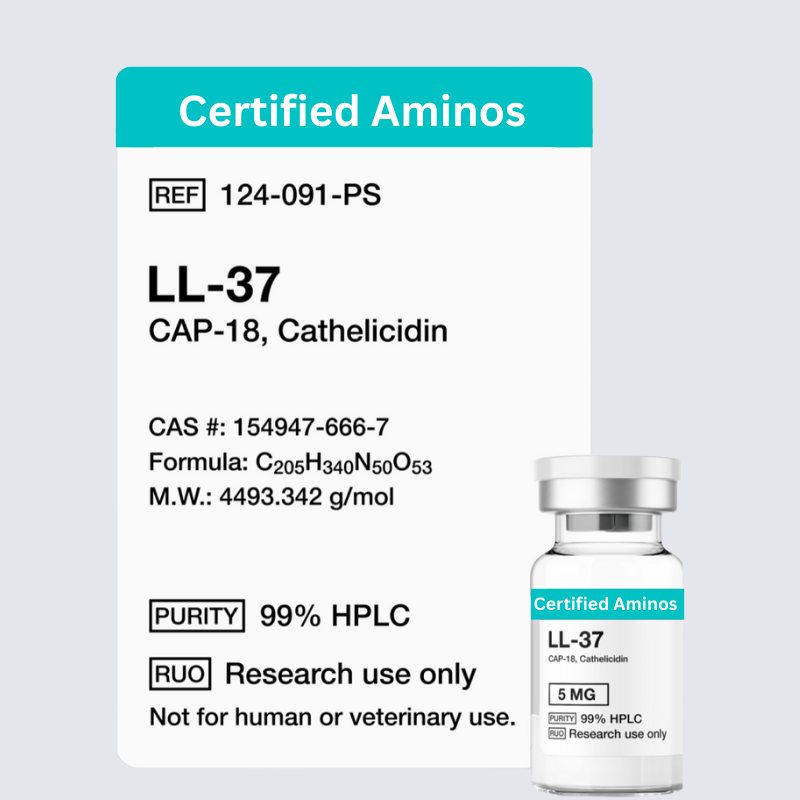
LL-37 5mg (CAP-18): A Powerful Immunomodulator and Anti-Aging Bioregulator
What is LL-37 (CAP-18)?
LL-37, also known as CAP-18, is the only human cathelicidin peptide with a wide range of biological activities. It is part of the antimicrobial peptides (AMPs) family, which play a critical role in the body’s first line of defense against infections. Found primarily in immune cells like macrophages and white blood cells, LL-37’s functions extend beyond just antimicrobial action, with beneficial effects in immune modulation, wound healing, and even potential cancer defense.
LL-37 Structure and Properties
-
Sequence: Leu-Lou-Gly-Asp-Phe-Phe-Arg-Lys-Ser-Lys-Glu-Lys-le-Gly-Lys-Glu-Phe-Lys-Arg-le-Val-Gin-Arg-le-Lys-Asp-Phe-Leu-Arg-Asn-Lou-Val-Pro-Arg-Thr-Glu-Ser
-
Molecular Weight: 4493.342 g/mol
-
Molecular Formula: CHNO
-
CAS Number: 154947-66-7
-
Synonyms: CAP-18, Cathelioidin, Antibacterial Peptide LL-37
The Role of LL-37 in Immune and Inflammatory Diseases
LL-37 is not only an effective antimicrobial agent, but it also plays a significant role in modulating inflammation. Studies have shown its involvement in several inflammatory diseases, such as psoriasis, rheumatoid arthritis, and lupus. LL-37 helps balance the immune system, reducing excessive inflammation and preventing overactive immune responses, which are often seen in autoimmune conditions.
Interestingly, LL-37 can have different effects depending on the inflammatory environment. In the context of arthritis, for instance, LL-37 has been shown to have protective properties, helping reduce the damage caused by excessive inflammation in affected joints.
LL-37’s Antimicrobial Action
As part of the innate immune system, LL-37 is one of the first responders to infections. It targets and neutralizes bacteria by binding to lipopolysaccharides (LPS) on the outer membranes of gram-negative bacteria, thus disrupting their structure and leading to bacterial death. This makes it an essential part of the body’s defense mechanism, particularly in skin infections, and shows potential in treating serious bacterial infections.
In addition to its activity against gram-negative bacteria, LL-37 is effective against gram-positive bacteria like Staphylococcus aureus, enhancing the action of other antimicrobial proteins such as lysozyme.
LL-37 in Lung and Respiratory Health
LL-37 has shown promise in lung health, particularly in the context of respiratory diseases such as asthma and chronic obstructive pulmonary disease (COPD). It promotes the healing of lung tissue by stimulating the proliferation of airway epithelial cells and encouraging the formation of new blood vessels. These properties make LL-37 an exciting potential treatment for conditions related to respiratory infections and lung tissue damage.
LL-37’s Impact on Arthritis and Joint Health
In arthritis, LL-37 appears to play a beneficial role by protecting joints from the damage caused by inflammation. Research suggests that LL-37 derivatives help prevent collagen degradation and reduce inflammation in joints affected by rheumatoid arthritis. LL-37’s effects in controlling inflammatory pathways have led to its investigation as a potential treatment to mitigate the symptoms of inflammatory arthritis.
LL-37 in the Intestine and Gut Health
Research indicates that LL-37 can support gut health by aiding the maintenance of the intestinal barrier and promoting the healing of inflamed tissue. It works in conjunction with other antimicrobial peptides to enhance intestinal cell migration, reduce cell death, and protect against conditions like inflammatory bowel disease (IBD).
LL-37’s potential as an adjuvant treatment for gastrointestinal conditions may help reduce reliance on current treatments that have more severe side effects, like TNF-alpha inhibitors.
Cancer and LL-37
LL-37 has been studied for its potential anti-cancer effects, particularly in the context of intestinal and gastric cancers. Studies suggest that LL-37 may support the immune system’s anti-tumor activity by modulating the inflammatory environment, potentially offering a new avenue for cancer treatment.
LL-37 and Angiogenesis
LL-37 has been linked to angiogenesis, the process by which new blood vessels form. It stimulates the production of prostaglandin E2 (PGE2), which is involved in blood vessel growth. This property could be beneficial in areas such as wound healing and heart disease, where promoting blood vessel formation is crucial for tissue repair.
Ongoing Research and Potential Applications
Ongoing studies continue to explore the diverse functions of LL-37, particularly in how its structure and effects vary across different species. This research may provide insights into how LL-37 can be optimized for therapeutic use, including its application in treating infections, inflammation, and even certain cancers.
Note on Usage
Please note that LL-37 is intended for research purposes only. It is not for human consumption and should only be used in controlled laboratory settings for educational or scientific research.
Reviews
There are no reviews yet.