

Description
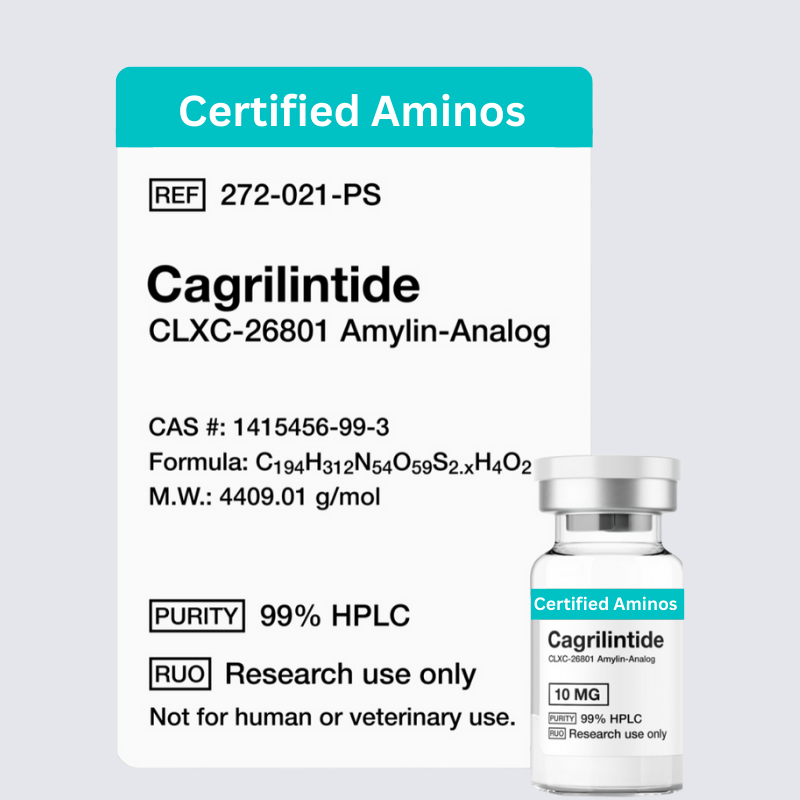
Cagrilintide 10mg – Advanced Amylin Analogue for Metabolic Research
Cagrilintide is a next-generation research peptide designed to mimic and enhance the function of amylin, a hormone naturally secreted alongside insulin. With a longer half-life and improved stability, this synthetic analogue shows great potential in studies related to obesity, type 2 diabetes, and other metabolic conditions.
What Is Cagrilintide?
Cagrilintide is a long-acting version of amylin, a peptide that plays a key role in regulating blood sugar and satiety. Naturally, amylin slows digestion, reduces appetite, and supports balanced glucose levels after meals. However, natural amylin breaks down quickly in the body—Cagrilintide solves this by being more stable and resistant to enzymatic degradation.
How Does It Work?
Research indicates Cagrilintide acts on three main areas:
-
Digestive System: Slows down how fast food leaves the stomach, promoting longer-lasting fullness and reducing sugar spikes after meals.
-
Brain: Interacts with receptors in the hypothalamus to reduce hunger and increase feelings of satiety.
-
Pancreas: Helps regulate glucagon levels, which can lower blood sugar and reduce fat storage.
These combined actions may support significant and sustained weight loss, making it a promising peptide for obesity research.
Research Highlights
-
Weight Management: In animal models, Cagrilintide alone led to a 6–11% reduction in body weight over a few weeks. When paired with Semaglutide, the effects were even more dramatic—up to 17% weight loss in just 20 weeks.
-
Blood Sugar Control: Shown to improve insulin sensitivity and reduce HbA1c levels, key indicators of diabetes management.
-
Cognitive Health Potential: While still under investigation, researchers are exploring Cagrilintide’s possible link to Alzheimer’s disease, given the shared pathways between amylin and beta-amyloid proteins.
Why Cagrilintide Is Unique
Unlike earlier amylin analogues like pramlintide, Cagrilintide has a significantly longer half-life and is less prone to aggregation—a common issue with native amylin that can harm pancreatic cells. These improvements make it more stable for extended research and more effective in producing long-lasting effects.
Structural Information
-
Sequence: XKCNTATCATORLAEFLRHSSNNFGPILPPTNVGSNTP
-
Molecular Formula: C₁₉₉H₃₁₇N₅₁O₆₁S
-
Molecular Weight: 4409.01 g/mol
-
CAS Number: 1415456-09-3
-
Synonyms: AT42613, AMB33
Applications in Research
Current and ongoing research is evaluating Cagrilintide for:
-
Obesity and appetite regulation
-
Type 2 diabetes management
-
Cardiovascular and liver-related complications
-
Potential neuroprotective benefits
While human clinical data is still emerging, early studies and animal models present exciting possibilities for this peptide across multiple areas of metabolic health.
Reviews
There are no reviews yet.