

Description
AOD9604 6mg – Peptide for Fat Metabolism Research
AOD9604 is a lab-engineered peptide originally developed from a specific fragment of human growth hormone (HGH), known as fragment 176-191. This particular version includes a disulfide bridge, which adds stability to the molecule. Designed for research purposes, AOD9604 has gained attention primarily for its ability to support fat metabolism, with additional potential applications in joint health and cardiovascular research.
What is AOD9604?
AOD9604 is a synthetic version of a short section of the HGH molecule. Unlike full HGH, it’s tailored to focus on stimulating fat breakdown (lipolysis) while limiting the creation of new fat cells (lipogenesis). What sets AOD9604 apart is its selectivity—it does not significantly impact IGF-1 or insulin levels, making it a promising candidate for researchers looking into obesity without the usual hormonal side effects.
Another notable aspect is that AOD9604 is structurally similar enough to HGH that it does not typically trigger an immune response, which helps reduce the risk of the body forming antibodies against it.
Peptide Structure and Key Info
-
Sequence: Tyr-Leu-Arg-Ile-Val-Gln-Cys-Arg-Ser-Val-Glu-Gly-Ser-Cys-Gly-Phe
-
Disulfide Bridge: Between Cys7 and Cys15
-
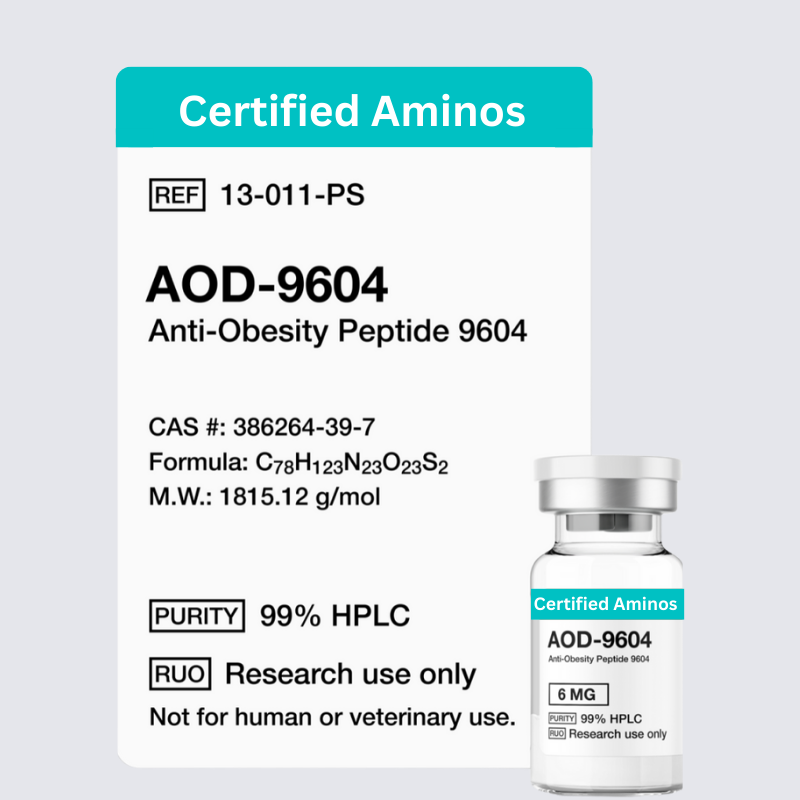
Molecular Formula: C78H123N23O23S2
-
Molecular Weight: 1815.12 g/mol
-
CAS Number: 386264-39-7
-
PubChem CID: 16131447
Research Highlights
1. Fat Metabolism and Weight Loss
AOD9604 was initially developed to mimic HGH’s fat-burning abilities without affecting muscle or bone growth. In clinical studies, daily use of AOD9604 showed promising results in supporting weight loss—participants in a 12-week trial experienced up to three times more fat loss compared to placebo groups.
Interestingly, studies in genetically obese mice showed that AOD9604 works through multiple mechanisms. While it may interact with beta-3 adrenergic receptors on fat cells, fat reduction still occurred even in mice lacking these receptors. This suggests AOD9604 may also trigger fat cell apoptosis (programmed cell death), adding another layer to its fat-reduction effects.
2. Joint Health and Osteoarthritis
Animal studies have also explored AOD9604’s potential in supporting joint function. In models of osteoarthritis, injections of AOD9604 into affected joints showed improved movement, reduced pain, and even structural changes in cartilage. These findings suggest that it may support both treatment and prevention of joint degeneration when used in combination with other therapies.
3. Cardiovascular and Metabolic Benefits
Beyond fat metabolism, researchers have observed that AOD9604 might positively influence heart health. While weight loss alone can reduce cardiovascular risk, AOD9604 may offer metabolic benefits that go beyond fat reduction—similar to medications like pioglitazone. These secondary effects could make it a valuable tool in metabolic research.
Safety and Availability
AOD9604 has demonstrated good bioavailability in lab animals and minimal side effects in studies. However, it is not approved for human use and is strictly intended for in-vitro and scientific research only.
Important Notice
All product details and referenced studies are provided for educational and research purposes only. AOD9604 is not a drug, supplement, or therapeutic product, and it has not been approved by the FDA. It must not be used in humans or animals outside of controlled research environments.
Reviews
There are no reviews yet.