

Description
What is VIP?
Vasoactive Intestinal Peptide (VIP) is a naturally occurring peptide found in the gut, brain, and pancreas. It plays a major role in regulating inflammation, protecting nerves, and supporting organ function. Research has shown VIP to be particularly promising in managing conditions involving chronic inflammation and tissue fibrosis—such as neurodegenerative diseases, lung disorders, inflammatory bowel disease (IBD), and cardiac fibrosis.
How VIP Works
VIP operates through multiple pathways in the body. Its core strength lies in its ability to calm the immune system, reduce inflammation, and protect tissue from damage. Here’s a closer look at what VIP does:
-
Reduces inflammation throughout the body
-
Prevents and slows fibrosis, which is the formation of scar tissue in organs
-
Supports healthy brain function and may help protect against neurodegeneration
-
Promotes lung health by reducing inflammation and supporting blood flow
-
Improves gut integrity by strengthening the intestinal lining
-
Helps regulate the immune response, particularly in autoimmune settings
Key Benefits of VIP Peptide in Research
1. Gut Health & Inflammatory Bowel Disease (IBD)
VIP is produced by immune cells and nerve fibers in the digestive tract. It helps calm overactive immune responses and promotes a healthy intestinal barrier. Studies have shown that VIP can reduce the inflammation associated with Crohn’s disease and ulcerative colitis by influencing T-cell activity and boosting production of anti-inflammatory agents.
2. Lung Function & Pulmonary Fibrosis
VIP helps prevent lung tissue scarring by limiting T-cell driven inflammation and regulating vascular responses. It has been found to reduce pulmonary artery pressure and inhibit smooth muscle thickening—an important factor in asthma and chronic obstructive pulmonary disease (COPD). These actions make it a potential candidate for treating end-stage lung diseases.
3. Neuroprotection & Brain Health
In the brain, VIP helps maintain the blood-brain barrier and reduce oxidative stress. Research suggests it may protect neurons in conditions like Alzheimer’s, Parkinson’s, and multiple sclerosis by balancing immune responses and encouraging the production of neuroprotective factors such as BDNF and ADNP.
4. Heart Health & Cardiac Fibrosis
VIP has shown the potential to not only slow heart tissue scarring but to reverse some damage in animal studies. This is achieved by downregulating pathways involving angiotensin—similar to how ACE inhibitors work in clinical medicine. As fibrosis is a key factor in heart failure, VIP’s role in managing this process is under active investigation.
5. Transplant Support & Immune Modulation
VIP impacts immune cells called dendritic cells, helping to prevent unwanted immune reactions such as those seen in organ transplant rejection. It promotes tolerance without severely compromising immunity, which could pave the way for safer transplant treatments in the future.
6. COVID-19 Applications
During the COVID-19 pandemic, a synthetic version of VIP—Aviptadil—was studied for its ability to protect lung cells and improve oxygen exchange in critically ill patients. Early findings showed rapid improvements in some patients on ventilators, and clinical trials are ongoing to further explore these effects.
Molecular Details
-
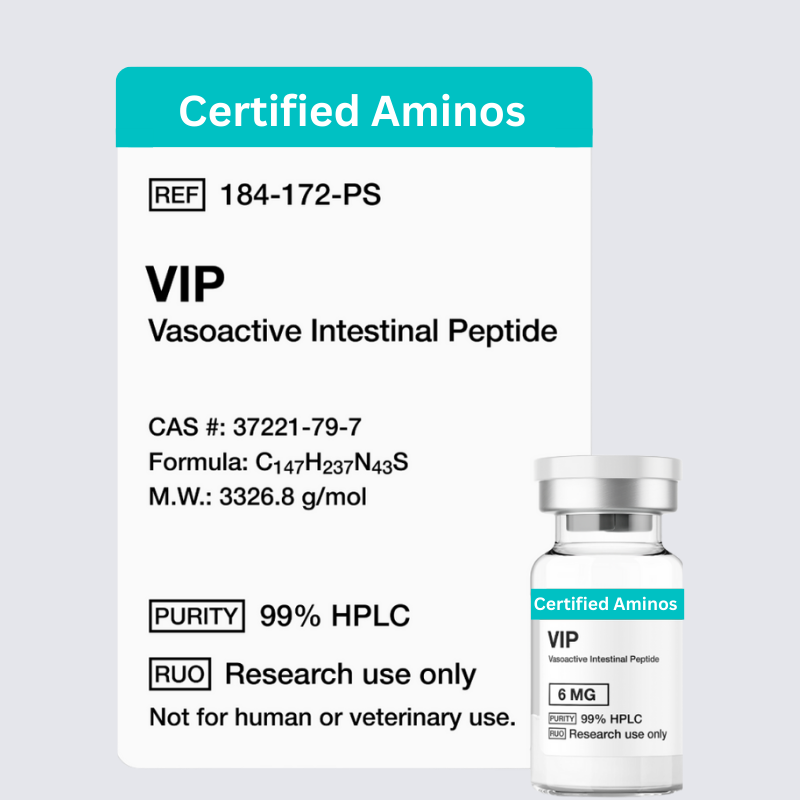
Peptide Name: Vasoactive Intestinal Peptide (VIP)
-
Amino Acid Sequence: HSDAVFTONYXRLRKOMAVKKYLNSXLN
-
Molecular Formula: CHNOₛ
-
Molecular Weight: [To be filled if known]
-
Gene Location: VIP, 6q25.2
-
CAS Number: 37221-79-7
-
Synonyms: PHM27, Vasoactive Intestinal Polypeptide
Why Researchers Are Interested
VIP has become a significant focus in the scientific community due to its diverse roles across multiple organ systems. From regulating circadian rhythms to enhancing cartilage health, its multifunctionality continues to open new doors in therapeutic research. With minimal observed side effects in preclinical studies and high subcutaneous bioavailability in animals, VIP is seen as a promising compound for future drug development.
Research Use Only
VIP 6mg offered by Amino Pharm is strictly for educational and research purposes only. It is not approved by the FDA for human or veterinary use, and it is not intended to diagnose, treat, or cure any disease. Use is limited to qualified researchers in controlled laboratory environments.
Reviews
There are no reviews yet.