

Description
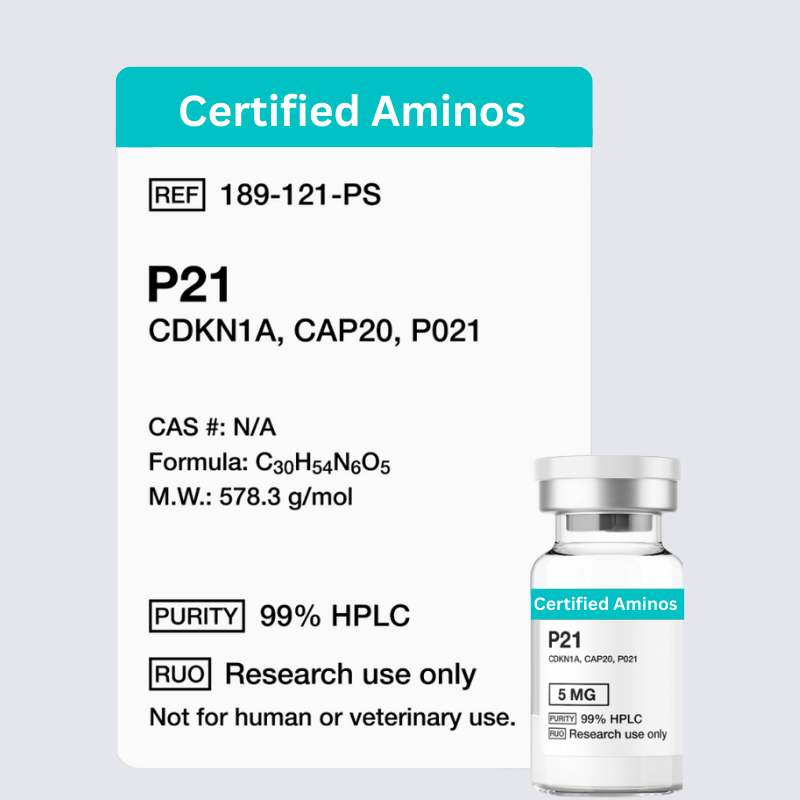
P21 (P021) 5mg: A Breakthrough Peptide for Neurogenesis and Cognitive Enhancement
P21, a potent nootropic peptide, is designed to support neurogenesis—the growth and development of new neurons. With robust scientific research backing its effectiveness, P21 has shown promise in enhancing cognition and potentially protecting the brain from the damage associated with neurodegenerative conditions such as Alzheimer’s disease.
What is P21?
P21 is a synthetic peptide derived from the naturally occurring protein CNTF (ciliary neurotrophic factor). CNTF plays a critical role in promoting the growth and protection of neurons, especially in the nervous system. Unlike CNTF, P21 is a smaller, modified version that not only mimics CNTF’s beneficial effects but also crosses the blood-brain barrier more efficiently. This makes P21 a unique tool for enhancing brain function and neurogenesis.
How Does P21 Work?
P21 works primarily by increasing neurogenesis in the brain’s dentate gyrus, a region involved in memory formation and cognitive function. Research has shown that P21 boosts the levels of brain-derived neurotrophic factor (BDNF), a key protein responsible for promoting the growth of new neurons. In doing so, it helps to improve learning, memory, and cognitive performance.
P21’s effects go beyond just promoting neuron growth. It also supports the prevention of amyloid plaque and tau protein accumulation—hallmarks of Alzheimer’s disease. By inhibiting the formation of these toxic proteins, P21 helps maintain cognitive function, making it a potential therapeutic agent for neurodegenerative conditions.
Key Benefits of P21
-
Enhances Neurogenesis: By promoting the formation of new neurons, P21 plays a key role in improving brain health, especially in the dentate gyrus region of the hippocampus.
-
Boosts Cognitive Function: Animal studies have shown that P21 improves learning and memory, making it a promising nootropic.
-
Protects Against Neurodegenerative Diseases: P21 helps reduce the formation of amyloid plaques and tau tangles, which are commonly found in Alzheimer’s disease.
-
Improves Synaptic Plasticity: P21 has been shown to enhance synapse formation, which is critical for memory and learning.
-
Potential to Enhance Mood and Reduce Anxiety: In some studies, P21 has been linked to lower anxiety levels in animal models.
P21’s Role in Alzheimer’s Disease
In research focused on Alzheimer’s, P21 has demonstrated the ability to support the brain’s natural efforts to fight neuron loss. It enhances the activity in the dentate gyrus, improving the brain’s ability to generate new neurons even in aging brains that may be struggling with neurogenesis. P21’s ability to reduce amyloid plaque and tau protein buildup in the brain could provide a novel approach to preventing or delaying the onset of Alzheimer’s symptoms.
P21 and Cognitive Enhancement
While P21’s potential as a treatment for neurodegenerative diseases is promising, it may also offer cognitive benefits for healthy individuals. Research suggests that it could improve memory and cognitive function by promoting neuroplasticity and supporting the growth of synapses between neurons. This makes P21 a potential tool not only for those with brain health concerns but also for individuals seeking cognitive enhancement.
The Science Behind P21
P21 was developed through a process known as epitope mapping, which identifies the specific binding sites of antibodies. This research led to the creation of P21, a tetrapeptide (composed of four amino acids) that effectively mimics CNTF. P21 has been designed to cross the blood-brain barrier and maintain stability in the body for longer periods, which gives it a significant advantage over larger neurogenic molecules like CNTF that cannot easily cross this barrier.
P21 Research and Development
P21 is a synthetic derivative of CNTF, but unlike the full-size CNTF molecule, it does not induce an immune response in the body. This makes P21 a safer and more efficient option for promoting neurogenesis. Studies in animal models have shown that P21 enhances brain-derived neurotrophic factor (BDNF) levels, which leads to improved cognitive function and brain health.
Potential Side Effects
In animal studies, P21 has shown minimal side effects, with the most notable change being a reduction in anxiety. No serious adverse effects have been observed, and while research on its effects in humans is limited, the peptide’s safety profile in animals gives hope for its potential use in clinical applications. However, more research is needed to fully understand its safety in human trials.
Conclusion
P21 is a powerful nootropic peptide with significant potential for enhancing neurogenesis and cognitive function. Through its ability to promote neuron growth, protect against neurodegeneration, and improve brain health, P21 offers promising benefits for those seeking to enhance their cognitive abilities or support brain health. While further research is needed, especially in human studies, P21 stands out as a cutting-edge solution for both neurodegenerative disease prevention and cognitive enhancement.
Reviews
There are no reviews yet.