
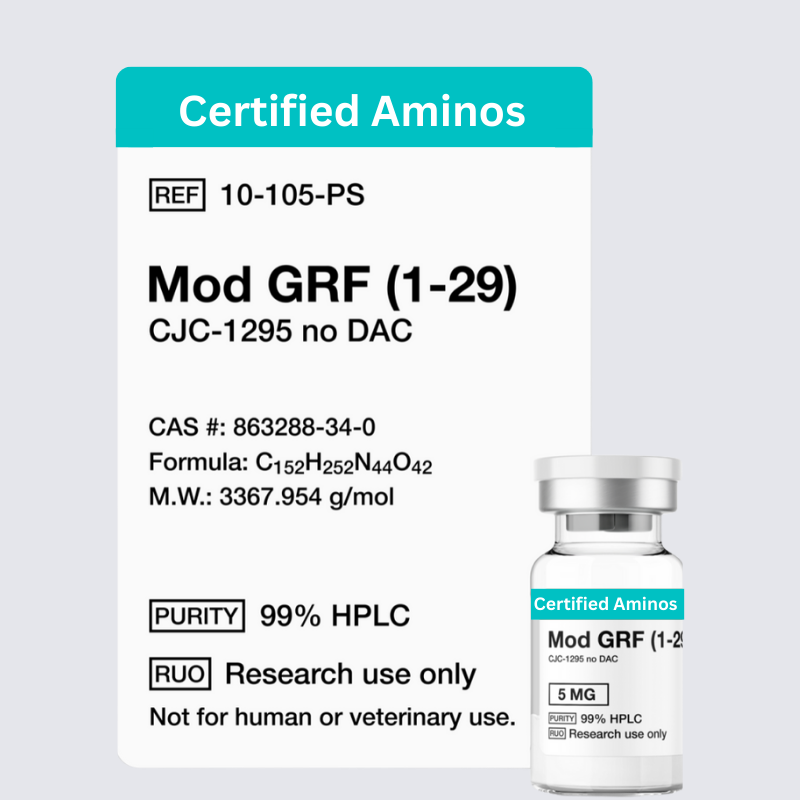

Description
What is Modified GRF (1-29)?
Modified GRF (1-29), also known as CJC-1295 without DAC, is a synthetic peptide that mimics the natural growth hormone-releasing hormone (GHRH). This peptide has been studied for its ability to enhance growth hormone release and is recognized for its potential in improving various aspects of health, including muscle repair, fat burning, and metabolism.
First developed in the 1980s, Modified GRF (1-29) was found to retain the critical properties of the full-length GHRH but with a shorter, more efficient structure. Unlike the naturally occurring GHRH, this modified version has been altered to improve stability, prevent degradation, and extend its half-life, making it more effective for therapeutic use.
Benefits of Modified GRF (1-29)
Research on Modified GRF (1-29) has shown promising benefits for various bodily functions. Its impact on growth hormone release can lead to:
-
Improved Muscle Growth: Helps enhance muscle repair and growth, aiding athletes and individuals looking to build muscle mass.
-
Accelerated Wound Healing: Promotes quicker recovery from injuries and wounds.
-
Stronger Bones: Supports bone health by stimulating growth factors related to bone density and strength.
-
Increased Fat Burning: Enhances fat metabolism, contributing to fat loss and a leaner body composition.
-
Boosted Metabolism: Improves overall metabolic processes, supporting better energy utilization and weight management.
Additionally, Modified GRF (1-29) may have positive effects on blood sugar regulation and the immune system, contributing to overall well-being.
Research Insights
Effects on the Intestine
Research suggests that GHRH analogues like Modified GRF (1-29) may help manage inflammatory bowel diseases, including Crohn’s disease, by improving bowel motility. Studies have shown that it interacts with receptors that influence gastrointestinal function, offering potential benefits for individuals suffering from digestive issues.
Heart Function
Studies in animal models indicate that Modified GRF (1-29) could improve heart function, particularly after events like heart attacks. This peptide may help increase blood flow, improving the quality of life for individuals with heart conditions like heart failure and pulmonary hypertension.
Thyroid and Growth Hormone Connection
Scientists have found a link between thyroid function and growth hormone release. Modified GRF (1-29) has been shown to enhance growth hormone response in individuals with thyroid issues, offering new insights into the relationship between these hormones.
Chemical and Structural Information
-
Molecular Formula: CHNO
-
Molecular Weight: 3367.964 g/mol
-
PubChem CID: 56841945
-
CAS Number: 863288-34-0
A Peptide for Research Use
While Modified GRF (1-29) shows great promise in the scientific and medical fields, it is important to note that it is intended solely for research purposes. It is not approved for human consumption and should only be used by licensed researchers in controlled environments.




Reviews
There are no reviews yet.